-
Shop
- Advanced Technologies
- AI Career Advantage Collection
- AI Skills for Creators & Freelancers
- AI Client Management
- AI Ethics
- AI Mindset
- AI Tools & Prompts
- AI Writing & Content Creation
- Audio, Voice & Music
- Design & Visual Creation
- Email, Messaging & Communication
- Freelancing & Business
- Marketing, Ads & Conversion
- Productivity, Workflow & Automation
- SEO & Search Optimization
- Social Media Content & Growth
- Strategy, Planning & Analytics
- Video Creation & Editing
- AI Skills Mastery 2026 Collection
- Bags & Wallets
- Bathroom
- Best-Sellers
- Car Accessories
- Confidence
- Dating & Social Skills
- Digital Resources
- AI & Technology
- AI Skills
- Beauty
- Budgeting & Saving
- Car Buying & Ownership
- Cozy Feast Collection
- Electronics & Technology
- Emotional Intelligence
- Entrepreneurship & Business Growth
- Financial Education
- Financial Independence
- Financial Mindset & Psychology
- Goal Setting
- Hobbies
- Home Styling & Organization
- Kitchen & Recipes
- Leadership
- Mindfulness
- Mindset
- Motivation
- Online Business
- Parenting & Child Development
- Personal Style & Fashion
- Pet Lifestyle & Wellness
- Positive Thinking
- Productivity
- Self Confidence
- Sleep Improvement
- Smart Life with AI
- Stress Management & Relaxation
- Travel Planning
- Wellness
- Yoga & Fitness
- Yoga & Mind-Body Practices
- Education & Learning
- Family & Parenting
- Fashion Accessories
- Furniture
- Gadgets
- Health & Beauty
- Health & Wellness
- Home Decor
- Home Electronics
- Home Supplies
- Kids & Babies
- Kitchen
- Lighting
- Luxury Brands Collection
- Online Business for Beginners
- Patio, Lawn & Garden
- Personal Growth
- Pet Care
- Pet Supplies
- Pets
- Shoes
- Super Deals
- TikTok Growth & Monetization Mastery
- Travel
- Travel & Adventure
- Wealth
- Wealth Building
- Popular
- Best deals
Crate Training Your Pup: A Practical Ebook Guide
25% off on product page · save $6.66
A Calmer Approach to Crate Training Your Pup
Why Positive Crate Training Can Help
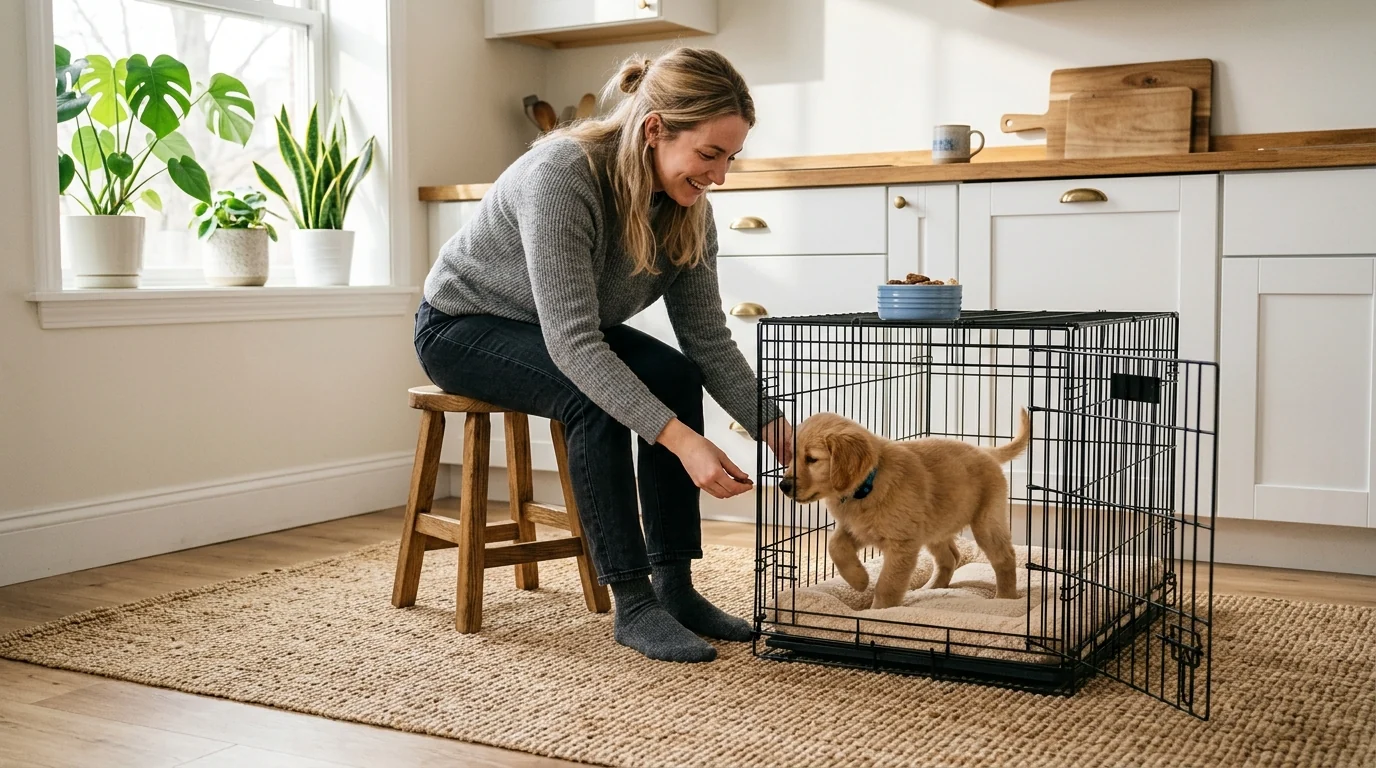
When introduced carefully, a crate can become a quiet retreat rather than a place associated with discipline or isolation. It may help with supervised toilet training, safer transportation, predictable naps, and temporary activity restriction under veterinary guidance after a procedure.
Crate training is optional. Owners wondering Are you supposed to crate train your dog? should consider their household routine and their dog’s individual response. Even a crate-trained puppy still needs frequent toilet trips, movement, play, training, social contact, and time outside the crate.
Healthy Crate Habits Versus Warning Signs
| Situation | Positive Sign | Warning Sign | Response |
|---|---|---|---|
| Entering | Walks in for treats or rest | Freezes, retreats, or struggles | Return to brief, door-open practice |
| Resting | Settles with relaxed posture | Pants, drools, or tries to escape | End the session and assess stress |
| Time alone | Remains calm for a practiced interval | Distress rises after departure | Shorten the interval |
Persistent panic, excessive drooling, repeated escape attempts, or self-injury requires a pause in training and advice from a veterinarian or qualified behavior professional.
Choose a Crate That Fits the Dog
The puppy should be able to stand, turn around, lie down, and stretch comfortably. During early toilet training, an unnecessarily large interior may allow elimination at one end and sleeping at the other; an adjustable divider can help tailor the space.
- Wire crates offer ventilation and visibility and often include dividers.
- Plastic crates provide more privacy and are commonly used for travel, although carrier requirements should be checked in advance.
- Soft-sided crates are portable but are not suitable for persistent chewers or dogs trying to escape.
Place the crate in a calm, comfortable part of the home where the puppy remains socially connected. Preserve airflow when using a cover, select bedding according to chewing habits, and remove collars, tags, and harnesses before leaving a puppy unattended in the crate because they can catch on crate components.
Featured in this guide
Crate Training Your Pup – A Practical Ebook Guide to Dog Crate Training Basics for Happy, Calm Dogs | Instant Digital Download
Build Duration Without Rushing
Use a consistent entry cue, reward calm behavior, and keep arrivals and departures low-key. Before a longer practice, offer a toilet opportunity and appropriate activity. Follow the session with movement, sniffing, play, training, or social contact suited to the puppy’s age.
If whining begins, consider whether the puppy needs to eliminate or feels frightened. Mild protest may settle after genuine needs have been met, but escalating fear should not be ignored in an attempt to make the puppy “give up.” Return to an easier stage instead.
Increase only one challenge at a time: duration, distance, movement, or time out of sight.
Timing, Breaks, and the 2:1 Idea
There is no universal safe daily crate limit. Age, health, elimination needs, activity, previous training, and emotional comfort all matter. Young puppies need more frequent movement and toilet breaks than healthy adult dogs and should not be expected to remain crated for an entire workday.
The commonly discussed What does the 2:1 rule for crate training mean? guideline is an informal scheduling concept, not a veterinary rule. It generally suggests about two hours of suitable activity, interaction, or supervised freedom for every hour of daytime confinement or rest. Individual needs and stress signals take priority.
Before each session, confirm that the puppy has recently eliminated, received suitable activity, appears able to settle, and has already succeeded at the planned duration. Consult a veterinarian about timing for very young puppies, senior dogs, dogs with medical conditions, or dogs whose elimination habits change suddenly.
Mistakes That Quietly Slow Progress
- Forcing the puppy into the crate.
- Using the crate as punishment.
- Jumping from seconds of practice to a long absence.
- Leaving unsafe chews, damaged bedding, snag hazards, or poorly fitted dividers inside.
- Ignoring escalating fear or repeated escape behavior.
If an accident occurs, treat it as management information rather than disobedience. Clean the area thoroughly, increase toilet opportunities, and shorten the next session. Barking after departure may signal insufficient distance practice or genuine distress; when possible, review recorded behavior and return to shorter absences.
How to use the crate
1
Choose the crate size for the dog and vehicle position
2
Attach the crate to the approved vehicle anchor point
3
Check the crate tension before the vehicle moves
4
Introduce the dog to the crate during the reference check
A Digital Reference for Consistent Practice
The Crate Training Your Pup digital guide organizes foundational crate-training steps into an instant digital download. It can serve as a reference during crate setup and daily practice while supporting gradual exposure and consistent cues.
Owners coordinating broader household routines may also find the Printable Daily Wellness Checklist and Self-Care Planner useful for organizing personal habits alongside pet-care responsibilities. Educational downloads do not replace individualized veterinary care or behavioral support for severe anxiety, aggression, panic, or self-injury.
FAQ
How many hours a day should you crate train?
There is no single suitable number for every dog. Use short, gradual sessions based on age, health, toilet capacity, experience, activity, and stress signals, with especially frequent breaks for puppies.
What is the fastest way to crate train a dog?
The most dependable method is not rushed. Pair the crate with treats and meals, begin with the door open, increase duration gradually, and step back if the dog shows stress.
Are you supposed to crate train your dog?
Crate training is not mandatory, but it can give a dog a secure place to rest while helping with house training, travel, and temporary confinement. A properly sized crate should allow your dog to stand, turn around, lie down, and stretch comfortably without providing excessive unused space.
What does the 2:1 rule for crate training mean?
The 2:1 rule generally means giving a young puppy about two hours of quiet crate rest for every one hour spent awake. This schedule supports the 18 to 20 hours of daily sleep many puppies need while creating predictable periods for play, feeding, training, and bathroom breaks.
See if Crate Training Your Pup – A Practical Ebook Guide to Dog Crate Training Basics for Happy, Calm Dogs | Instant Digital Download fits your setup
Which Sneakers Are the Best Quality? Top Picks
Sep 22, 2026











Leave a comment