-
Shop
- Advanced Technologies
- AI Career Advantage Collection
- AI Skills for Creators & Freelancers
- AI Client Management
- AI Ethics
- AI Mindset
- AI Tools & Prompts
- AI Writing & Content Creation
- Audio, Voice & Music
- Design & Visual Creation
- Email, Messaging & Communication
- Freelancing & Business
- Marketing, Ads & Conversion
- Productivity, Workflow & Automation
- SEO & Search Optimization
- Social Media Content & Growth
- Strategy, Planning & Analytics
- Video Creation & Editing
- AI Skills Mastery 2026 Collection
- Bags & Wallets
- Bathroom
- Best-Sellers
- Car Accessories
- Confidence
- Dating & Social Skills
- Digital Resources
- AI & Technology
- AI Skills
- Beauty
- Budgeting & Saving
- Car Buying & Ownership
- Cozy Feast Collection
- Electronics & Technology
- Emotional Intelligence
- Entrepreneurship & Business Growth
- Financial Education
- Financial Independence
- Financial Mindset & Psychology
- Goal Setting
- Hobbies
- Home Styling & Organization
- Kitchen & Recipes
- Leadership
- Mindfulness
- Mindset
- Motivation
- Online Business
- Parenting & Child Development
- Personal Style & Fashion
- Pet Lifestyle & Wellness
- Positive Thinking
- Productivity
- Self Confidence
- Sleep Improvement
- Smart Life with AI
- Stress Management & Relaxation
- Travel Planning
- Wellness
- Yoga & Fitness
- Yoga & Mind-Body Practices
- Education & Learning
- Family & Parenting
- Fashion
- Fashion Accessories
- Furniture
- Gadgets
- Health & Beauty
- Health & Wellness
- Home & Garden
- Home Decor
- Home Electronics
- Home Supplies
- Kids & Babies
- Kitchen
- Kitchen Best-Sellers
- Lighting
- Luxury Brands Collection
- Online Business for Beginners
- Patio, Lawn & Garden
- Personal Growth
- Pet Care
- Pet Supplies
- Pets
- Shoes
- Sport & Outdoors
- Super Deals
- TikTok Growth & Monetization Mastery
- Travel
- Travel & Adventure
- Wealth
- Wealth Building
- Popular
- Best deals
When Should Crate Training Stop? A Guide to Transitioning
25% off on product page · save $6.66
When Should Crate Training Stop? A Guide to Transitioning
There Is No Set Age to Stop
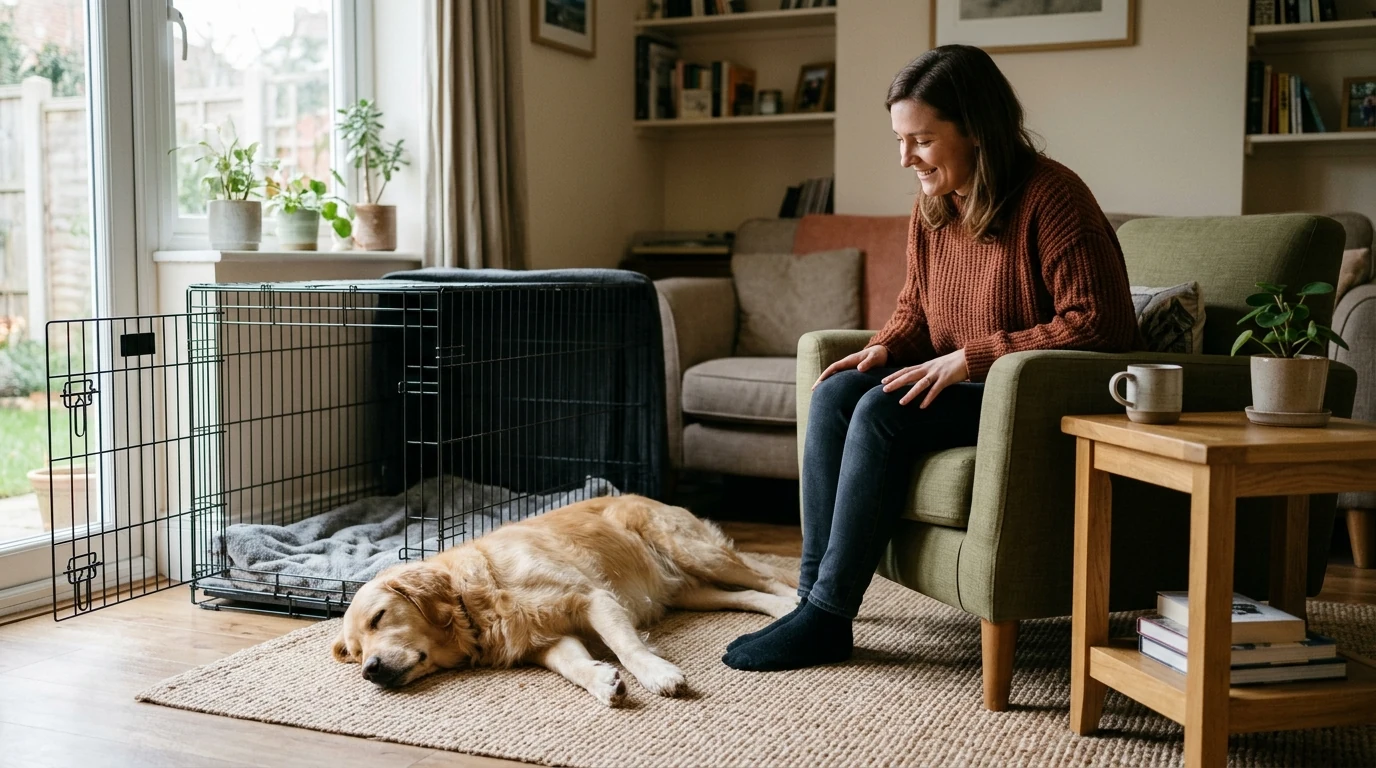
Crate training does not have to stop at a particular age; you can begin reducing crate time when your dog is reliably house-trained, settles calmly, and can be trusted not to chew unsafe items when unsupervised. For some dogs, that readiness comes during adolescence, while others need more time, so we recommend looking at your dog’s behavior rather than following a birthday on the calendar.
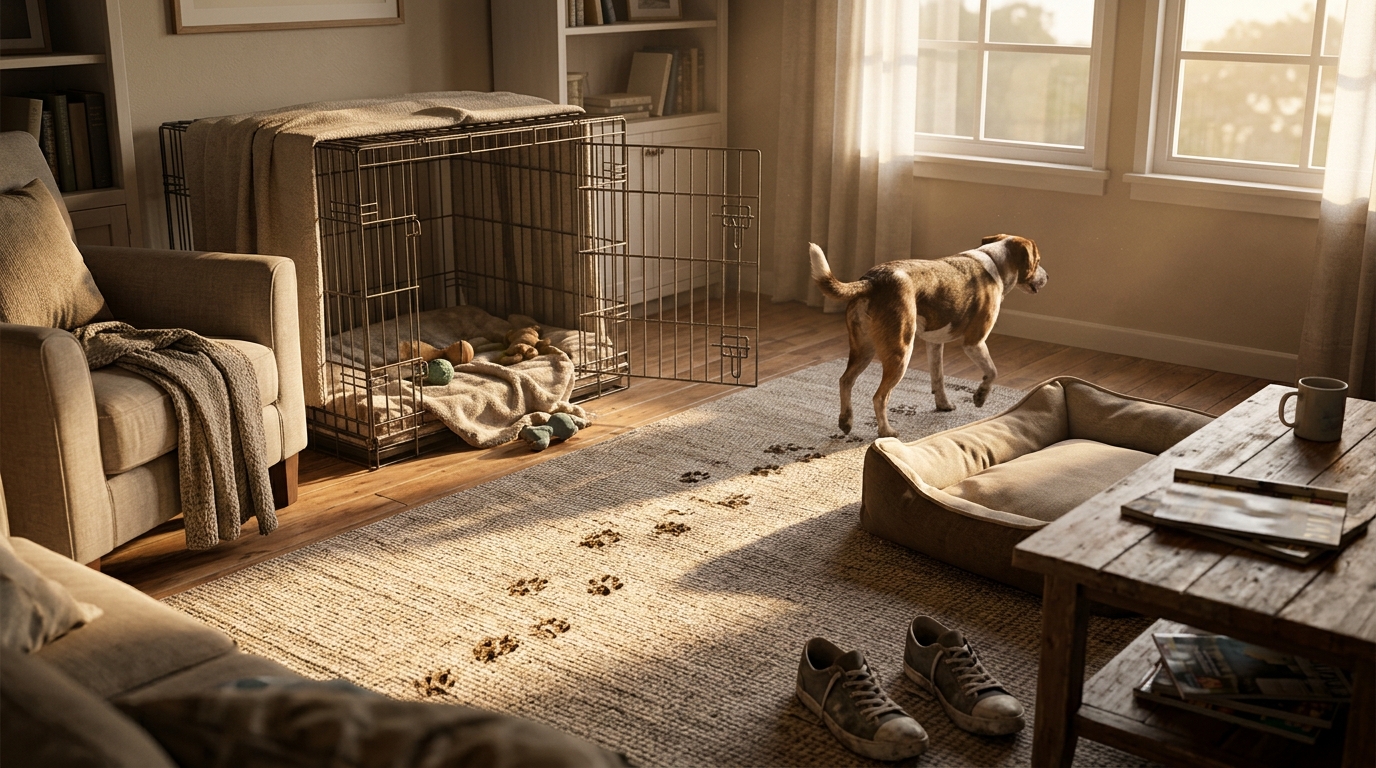
Look for Consistent Readiness
Before leaving the crate open, notice whether your dog can relax outside it, avoids indoor accidents, and leaves furniture, cords, and other tempting objects alone during short periods without your attention. A few good days are encouraging, but consistent behavior across your normal routine gives you a more useful indication that your dog is ready for more freedom.
Featured in this guide
Crate Training Your Pup – A Practical Ebook Guide to Dog Crate Training Basics for Happy, Calm Dogs | Instant Digital Download
Make the Transition Gradually
Start with a short absence in one dog-proofed room, remove hazards such as accessible cords and small objects, and make sure your dog has water and a comfortable place to rest. If that goes well, slowly increase the time or available space; if your dog has an accident or becomes destructive, return to a shorter interval and build up more gradually.
Keep the Crate as an Option
Stopping routine confinement does not mean you must remove the crate: leaving the door open can give your dog a familiar resting place and help maintain comfort with it for travel, veterinary visits, or other situations. If your dog shows sustained distress in the crate or struggles when left alone, our team recommends discussing the behavior with your veterinarian or a qualified dog trainer rather than simply extending confinement; for an introduction to the basics, see our Crate Training Your Pup practical ebook guide.
How to use the crate
1
Choose the crate size for the dog and vehicle position
2
Attach the crate to the approved vehicle anchor point
3
Check the crate tension before the vehicle moves
4
Introduce the dog to the crate during the when should check
FAQ
How do I know when to stop crate training?
Your dog may be ready for less crate time when they consistently stay calm, avoid accidents, and leave household items alone while unsupervised. Test that readiness with brief periods in a safe room, then increase freedom gradually as your dog succeeds.
See if Crate Training Your Pup – A Practical Ebook Guide to Dog Crate Training Basics for Happy, Calm Dogs | Instant Digital Download fits your setup
Where to Buy Edible Cake Decor for Any Occasion
Nov 4, 2026













Leave a comment